

 Secure Shipping

 Worldwide express delivery
 Secure Payment
Turbo lag explained: causes and ways to reduce it
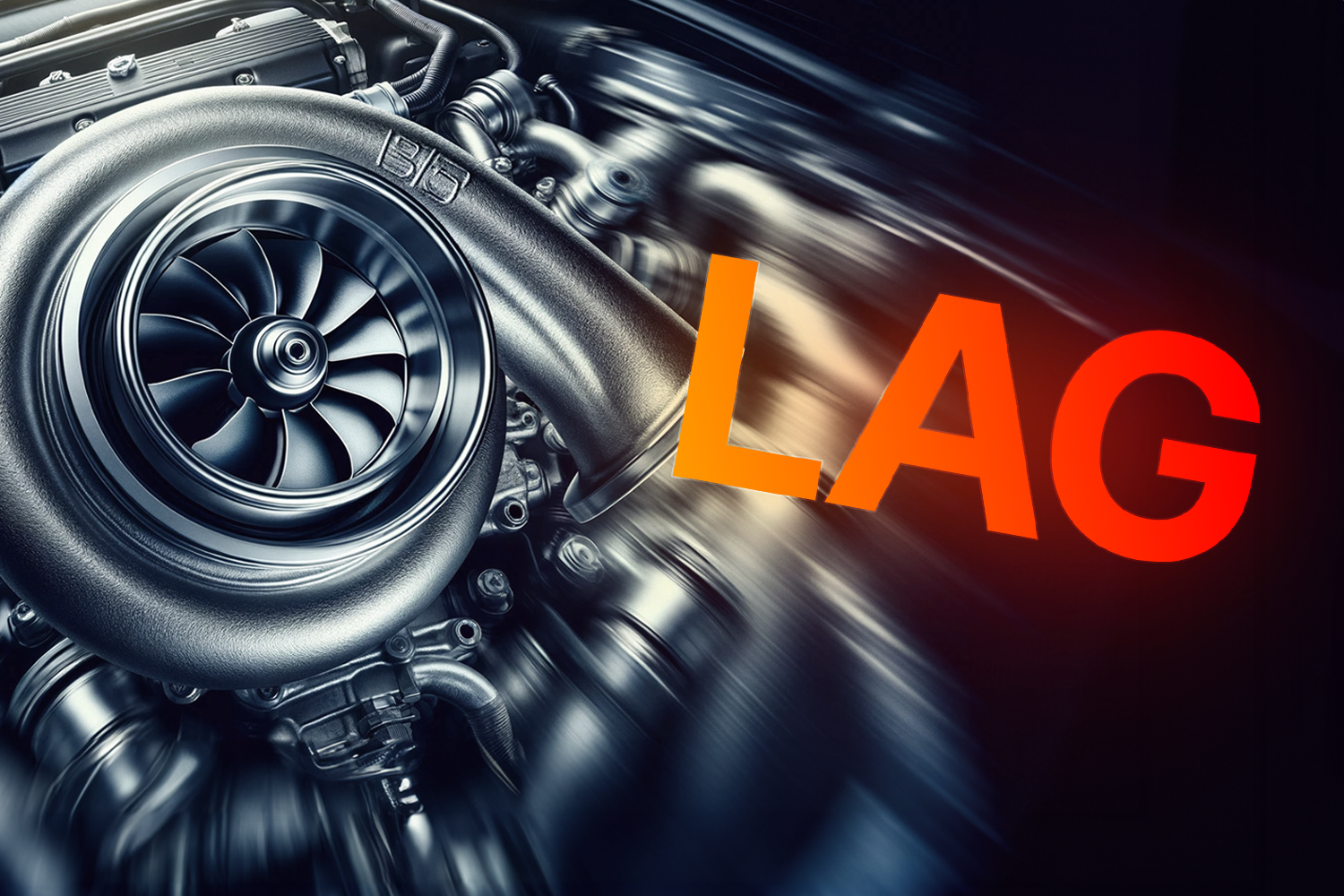
Turbochargers have become an integral part of modern automotive engineering, offering vehicles a mix of power and efficiency. But even with all their benefits, they come with a kind of peculiarity – the turbo lag. This phenomenon can influence the driving experience and even the performance of an engine, which has led many fans and engineers to seek ways of minimizing it. In this fine exploration, we delve into the science behind turbocharger lag and unwrap strategies to bring down its effect.
TL;DR: Turbo lag is the delay between throttle input and boost build-up while the turbine/compressor accelerate. Lag grows with inertia, system volume, and poor calibration; it shrinks with better pulse energy, efficient piping/intercooler, twin-scroll/VGT/e-assist, and sound ECU control. Start by fixing leaks and wastegate/VGT issues, then optimize control, then hardware.
| Factor | Effect on lag | Typical mitigation |
|---|---|---|
| Turbo size & rotor inertia | Larger/heavier wheels spool slower → more lag | Ball-bearing CHRA, lighter wheels, smaller A/R, twin-scroll, VGT, e-assist |
| Exhaust pulse energy & manifold | Poor pulse separation & long runners reduce spool | Equal-length/twin-scroll manifold, low-volume runner design, healthy catalyst/DPF |
| Intake/IC volume & leaks | Large volume and leaks delay boost rise | Shorter piping, efficient intercooler, fix boost/vacuum leaks |
| Boost control & calibration | Slow wastegate/VGT control increases lag | ECU remap, electronic boost control, pre-spool strategies (motorsport features where legal) |
| Engine characteristics | Small displacement/low CR feel laggier | Appropriate turbo sizing, hybrid e-assist, gearing/shift strategy |
Understanding Turbocharger
Lag
What Is Exactly Turbocharger Lag?
Turbocharger lag can be defined as the delay that comes between the time one goes to open the throttle and when the turbocharger has increased power to deliver. Basically, this is the time that is taken before the turbo spin by the exhaust gases can reach a speed where it can be used for effective engine boosting.
The Working of Turbochargers
In this, exhaust gases force the turbine and in turn
compress the air coming into the engine. Engines produce more power with this
compressed air by allowing more fuel to be burned by the engine. This lag comes
in because the process is not instant.
Lag Components
Size and Inertia of Turbocharger
The size, as well as the design of the turbocharger, forms quite a significant component of lag. Big turbos really produce far much power, but they have higher inertia in relation to rotational speed or acceleration.
Exhaust Gas Dynamics
Now, the flow and pressure of the exhaust gases affect
the speed at which the turbo spools up. When there is a fast flow from the
exhaust gases at the point where they leave to the turbo, then lag is reduced
because there is an efficient exhaust system.
Technological Innovations
that Reduce Turbo Lag
Variable Geometry Turbos (VGT)
VGTs regulate the angle of the vane of that turbo to maintain the best speed for exhaust gas flow thereby allowing lag reduction.
Twin-Scroll Turbochargers
These turbochargers disassemble the exhaust path from
the engine to the turbine thus reducing interference as well as lag reduction.
- Fix fundamentals first: smoke-test for boost/vacuum leaks; verify wastegate/VGT actuation and free turbine movement; check for exhaust restrictions (cat/DPF health) where legal.
- Optimize control: calibrate wastegate duty/VGT position and boost targets (by gear/RPM); ensure safe AFR, ignition and EGT limits; consider electronic boost control.
- Right-size hardware: reduce piping/intercooler volume, improve manifold pulse energy (twin-scroll/equal-length), consider ball-bearing CHRA or e-assisted turbo for instant spool.
Aftermarket Solutions for
Turbo Lag
Better Intercoolers
An intercooler that can decrease the temperature of air coming into the engine to improve its density and hence oxygen content will allow a better and quicker turbocharger response, which in turn would be more efficient.
Electronic Boost Controllers
These devices can tune the turbocharger at peak
effectiveness, managing its boost levels more effectively and reduce lag.
Driving techniques that
help to minimise turbo lag
Shifting strategies
Thus, knowing when to shift gears in a turbocharged vehicle can reduce what is perceived as lag by maintaining the engine RPM within a range that keeps the turbo spooled up.
Throttle Control
Moderating the throttle inputs can keep the
turbocharger within their efficient operating range, and therefore ensures less
lag.
Electrically Assisted
Turbochargers
Incorporation of turbochargers with electric motors,
designed to crush lag with an instant boost instead of waiting for the build-up
of the exhaust gas provides a state-of-the-art technique.
Hybrid Turbocharging
Systems
These make use of old school turbocharging in combination with electric motor assistance to pair the best of both worlds – instant response and high-end power.
I wish to Defy Common Misconceptions on Turbo Lag
"A Great Big Turbo Always Means More Lag"
However, this bigger polar behavior does come at the expense of greater lag, which can be readily reduced by modern design techniques and technologies.
"Turbo Lag Damages the Engine"
Turbo lag, by itself, does not harm an engine; it is more a handicap in drivability and performance impression.
Reducing Turbo Lag from
Engine Tuning
ECU Remapping
Modifying the existing controls available in an electronic control unit (ECU) of the engine can do the aforementioned turbocharger optimization for performance.
Refining Fuel and Ignition Timing
The above changes may make the engine more
responsible, so in turn it is indirectly taking its effect on the turbo lag.
Comparing Turbo Lag
Features of Diesel Engines with Petrol Engines
Turbo Lag Characteristics of Diesel Engines
Unlike petrol engines, diesel ones are generally associated with a relatively high turbo lag due to their high compression ratios and low-engine speeds.
Dynamics of the Petrol Engine
Petrol engines, comparatively, mostly have less turbo
lag considering the lower compression ratios and free revving attributes.
Turbo Lag in High
Performance Auto Racing
Racing Techniques to Reduce Turbo Lag
The racing tricks like 'left-foot braking' are usually in terms of adoption by the racers and professional drivers to keep the turbo spooled up even during the high performance.
Significance of Turbo Lag in Tuning
One of the important factors when it comes to
performance tuning is the turbo lag because every human always wants a perfect
balance between power as well as responsiveness.
DIY Tips for Trimming
Turbo Lag
Regular Maintenance
When the turbocharger, as well as related stuff, runs in good condition, this can lead to ensuring the best performance with lesser lag.
Ideas for Upgrading
Some easy upgrades that aid in decreasing turbo lag
include fitting of either an efficient exhaust system or a high-flow air
filter.
FAQs on Turbocharger Lag
Is it possible to eliminate the instance of turbo lag?
Although it is not possible to eradicate it
completely, it can be nearly negligible with a wide range of technologies and
methods.
Is turbo lag more in older cars?
Yes, turbo lag is usually considerably worse in older
vehicles, definitely ones that lack the implementation of recent sophisticated
turbocharging technologies on offer.
Does an electric turbocharger have lag?
An electric turbocharger almost eliminates the lag by
immediately spooling the turbo through the electric motor.
How is a twin-scroll turbo reducing lag done?
A twin-scroll turbo reduces lag by splitting the
exhaust pulses, hence eventually reducing interference between both sides and
therefore making the turbocharger much more efficient.
Is reducing turbo lag all about size? How else more
easily can one find to reduce turbo lag?
The size of the engine may affect how turbo lag is
felt, smaller engines may feel more turbo lag since they lack the power
baseline.
The easiest way is usually a combination of driving
techniques with simple modifications of the vehicle such as replacing the air
intake system.
- Can turbo lag be eliminated? Not entirely on conventional hardware, but it can be made negligible with correct sizing, ECU control, efficient piping/IC, and e-assist/VGT.
- Do older cars have more lag? Often yes, due to heavier turbos, less efficient manifolds/ICs, and older control systems.
- Do e-turbos have lag? They greatly reduce perceived lag by adding electric torque for immediate spool.
- How does twin-scroll reduce lag? It separates exhaust pulses, improving turbine efficiency at low RPM and speeding spool.
- What easy steps reduce lag? Fix leaks, ensure proper wastegate/VGT operation, shorten/clean up piping, use an efficient intercooler, update ECU mapping.
Conclusions: Implementing
Turbo Technology with a New Feeling
The turbocharging technology advancement ensures that the dream of high
power with minimal lag is not far away. Understanding the science behind the
lag of turbocharger, and using strategies to diminish this effect, kind-hearted
turbocharged engines shall be able to give more and more to the drivers.
Updated: 2025-11-05 • Author: BR TURBO