

 Secure Shipping

 Worldwide express delivery
 Secure Payment
Supercharger vs. Turbocharger: 10 Key Differences
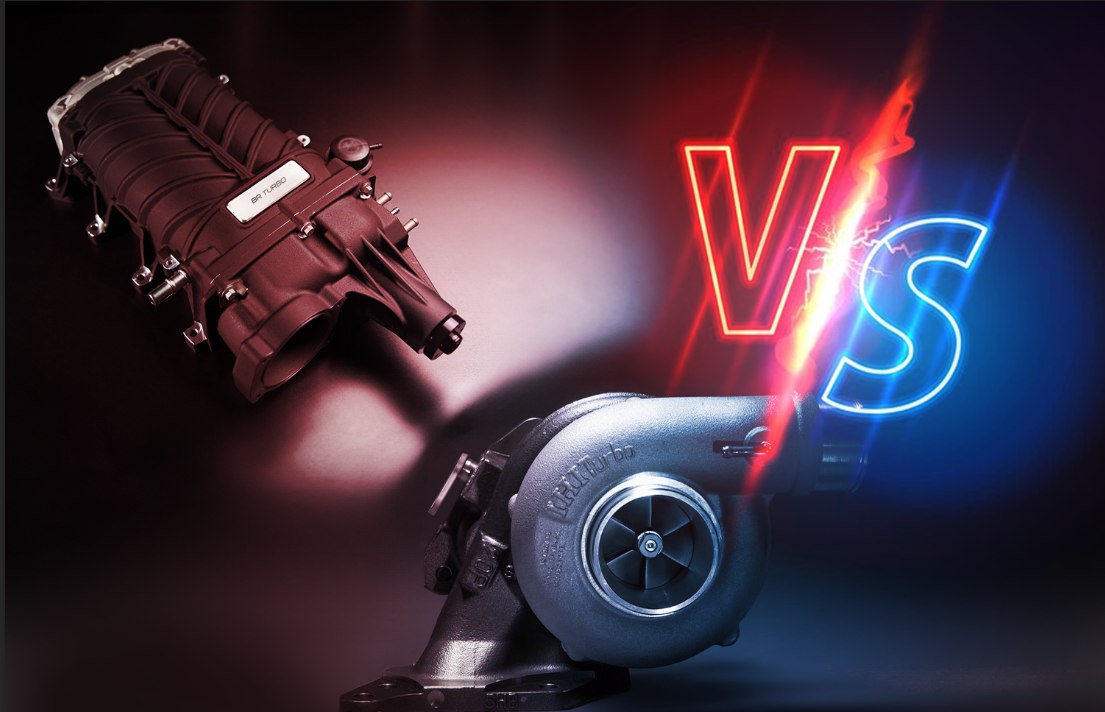
Supercharger vs Turbocharger: Key Differences, Advantages, Disadvantages and Performance Explained
What is the difference between a supercharger and a turbocharger? Both systems increase engine power by compressing intake air, allowing a greater mass of oxygen to enter the cylinders. The main difference is how they are powered: a conventional supercharger is driven mechanically by the engine, while a turbocharger uses energy from the engine's exhaust gases.
This distinction affects almost everything about how these forced-induction systems perform, including throttle response, torque delivery, fuel efficiency, mechanical losses, heat generation, installation requirements and maintenance.
Superchargers are often associated with immediate throttle response and strong low-speed performance. Turbochargers are widely used in modern vehicles because they can recover some of the energy carried by exhaust gases and provide substantial power from relatively small engines.
However, the comparison is not as simple as saying that superchargers deliver instant power while turbochargers deliver more power. Modern superchargers use different compression technologies, and modern turbochargers can be engineered to provide rapid response and strong torque across a wide engine-speed range.
Neither system is automatically more powerful, reliable or economical in every application. The outcome depends on the engine design, compressor characteristics, boost pressure, calibration, cooling, maintenance and intended operating conditions.
In this comprehensive BR Turbo guide, we examine how superchargers and turbochargers work, compare their advantages and disadvantages, explain important technologies such as twin-scroll turbochargers and twincharging, and help you understand which forced-induction system is more suitable for different applications.
1. Supercharger vs Turbocharger: What Is the Main Difference?
The fundamental purpose of both a supercharger and a turbocharger is to increase the mass of air supplied to an internal combustion engine.
In a naturally aspirated engine, air enters the cylinders primarily because of the pressure difference created during the intake process. In a forced-induction engine, an additional compressor increases intake pressure and air density, enabling the engine to burn more fuel and generate more power under appropriate operating conditions.
The most important technical difference is the source of energy that drives the compressor.
- Supercharger: A conventional mechanically driven supercharger receives power directly from the engine crankshaft, generally through a belt or gear drive.
- Turbocharger: A turbocharger uses an exhaust-driven turbine connected by a shaft to a centrifugal compressor.
Because the supercharger is mechanically connected to the engine, it consumes some of the engine's mechanical power to operate. A turbocharger instead extracts energy from the exhaust stream, although the turbine also creates exhaust backpressure and other system losses.
Quick comparison: supercharger vs turbocharger
| Comparison factor | Supercharger | Turbocharger |
|---|---|---|
| Power source | Mechanical drive from the engine, typically a belt or gears | Energy extracted from exhaust gases by a turbine |
| Throttle response | Often very immediate, especially with positive-displacement designs | Depends on turbine speed, sizing, exhaust flow and boost-control strategy |
| Low-RPM performance | Roots and twin-screw designs can deliver strong low-RPM boost | A properly matched turbocharger can also deliver strong low-speed torque |
| Mechanical power consumption | Uses crankshaft power to drive the compressor | Does not require the same direct mechanical drive, but causes exhaust-side losses |
| Fuel efficiency | Depends on compressor type, engine operating point and drive losses | Often advantageous for engine downsizing and efficiency-focused applications |
| Heat management | Compressing air generates heat; charge-air cooling may be required | Compressing air generates heat, and the turbine operates in the hot exhaust stream |
| Installation considerations | Requires a mechanical drive, suitable mounting and sufficient space | Requires suitable exhaust routing, oil and possibly coolant connections, intake plumbing and boost control |
| Maintenance considerations | Drive belt or gears, bearings, seals and any dedicated lubricant | Oil supply and drainage, bearing condition, cooling, actuators and intake/exhaust integrity |
| Typical applications | Certain performance engines, specialist applications and aftermarket builds | Modern petrol and diesel vehicles, commercial engines and performance applications |
In simple terms: A supercharger typically prioritises direct mechanical response, while a turbocharger uses exhaust energy to provide compressed intake air. The actual performance advantage depends on the specific technology and engine application.
2. How Does a Supercharger Work?
A conventional automotive supercharger is an air-compression device mechanically driven by the engine.
Depending on the system, a belt, gears or another mechanical drive transfers rotational energy from the crankshaft to the supercharger.
The supercharger draws in air, increases its pressure and delivers it to the engine's intake system. The increased air density allows more oxygen to enter the cylinders and, with the appropriate fuel supply and engine calibration, supports greater torque and horsepower.
The operating sequence is generally as follows:
- The crankshaft rotates while the engine is running.
- A belt or gear drive transfers mechanical power to the supercharger.
- The supercharger's rotors or impeller move and compress the intake air, depending on the design.
- Compressed air flows into the intake system, sometimes passing through an intercooler.
- The engine management system supplies the appropriate fuel and controls combustion.
- The engine produces additional torque and power when operating conditions allow.
Because the compressor is mechanically linked to the engine, its operating speed is related to crankshaft speed. This generally provides a predictable relationship between engine operation and supercharger performance.
However, it is important to distinguish between different supercharger designs. A positive-displacement supercharger and a centrifugal supercharger do not deliver the same boost characteristics across the engine-speed range.
The main disadvantage of mechanical drive is parasitic power consumption. Some of the power generated by the engine is required to operate the supercharger itself.
The amount of power consumed depends on the supercharger design, pressure ratio, air mass flow, efficiency and operating conditions.
Despite these losses, a correctly engineered supercharged engine can still produce substantially more usable power and torque than a comparable naturally aspirated configuration.
3. How Does a Turbocharger Work?
A turbocharger is an exhaust-driven forced-induction device designed to increase the mass of air supplied to an internal combustion engine.
Unlike a mechanically driven supercharger, a conventional turbocharger does not require a belt connection between its compressor and the engine crankshaft.
Instead, it uses the energy of exhaust gases leaving the engine to drive a turbine.
A typical turbocharger contains the following major components:
- Turbine housing: Directs exhaust gases toward the turbine wheel.
- Turbine wheel: Converts energy from the exhaust stream into rotational mechanical power.
- Turbocharger shaft: Connects the turbine wheel to the compressor wheel.
- Compressor wheel: Draws in ambient air and compresses it.
- Compressor housing: Guides the intake air through the compressor and toward the engine.
- Centre housing and bearing system: Supports the rotating assembly and accommodates the lubrication system.
- Boost-control components: Depending on the design, a wastegate or variable turbine geometry system regulates turbine operation and boost pressure.
The operating principle of a turbocharger:
- Combustion in the engine produces exhaust gases.
- These gases flow through the exhaust manifold into the turbine housing.
- The exhaust flow drives the turbine wheel.
- The turbine wheel rotates a common shaft connected to the compressor wheel.
- The compressor draws in air and increases its pressure and density.
- In many applications, the compressed air passes through an intercooler before entering the engine.
- The increased oxygen supply allows additional fuel to be burned and more power to be generated under appropriate operating conditions.
A turbocharger does not operate using completely free energy. Extracting energy from exhaust gases affects exhaust pressure and creates pumping losses. Nevertheless, this approach can be advantageous because it avoids the direct mechanical drive losses associated with a conventional supercharger.
Turbocharger efficiency depends on the entire system, including turbine sizing, compressor efficiency, exhaust backpressure, charge-air cooling, boost regulation and engine calibration.
Proper lubrication is equally important. Many turbochargers use engine oil to lubricate and cool their bearing systems. Some designs also incorporate coolant passages to help manage operating temperatures.
The turbocharger must therefore be treated as part of a complete engine system rather than as an isolated component.
4. Types of Superchargers: Roots, Twin-Screw and Centrifugal
Not all superchargers operate in the same way. The three most widely discussed mechanical supercharger designs are Roots-type, twin-screw and centrifugal superchargers.
Roots-Type Superchargers
A Roots-type supercharger uses intermeshing lobed rotors to move air from its inlet toward the outlet.
It is a positive-displacement air mover, meaning that it transports a relatively consistent volume of air per revolution. Most of the pressure rise occurs as the delivered air encounters the pressurised intake system, rather than through extensive internal compression between the rotors.
Typical characteristics:
- Strong low-RPM boost capability.
- Very responsive power delivery.
- Predictable torque characteristics.
- Mechanical drive losses.
- Potentially significant charge-air heating depending on the design and operating conditions.
Modern Roots-derived designs, including advanced rotor technologies, can provide substantial improvements over older configurations.
Twin-Screw Superchargers
Twin-screw superchargers use specially shaped intermeshing screw rotors to compress air internally as it moves through the supercharger.
Like Roots-type devices, they belong to the positive-displacement category and can provide substantial airflow at relatively low engine speeds.
Their efficiency and temperature characteristics depend on rotor geometry, clearances, pressure ratio and operating speed.
Typical characteristics:
- Strong and responsive low-speed performance.
- Internal air compression.
- Potential for good efficiency within the intended operating range.
- Greater mechanical complexity and manufacturing precision requirements.
- Mechanical power consumption from the engine.
Centrifugal Superchargers
A centrifugal supercharger uses a high-speed compressor impeller similar in principle to the compressor stage of a turbocharger.
However, its impeller is driven mechanically by the engine, commonly through a belt and an internal step-up drive.
Unlike typical positive-displacement systems, a centrifugal supercharger's pressure and flow characteristics generally change more significantly with compressor speed.
Typical characteristics:
- Compact centrifugal compressor design.
- Boost capability that generally increases as engine speed rises.
- Strong potential for high-RPM power.
- Different low-RPM response characteristics from Roots and twin-screw superchargers.
- Mechanical drive and associated power losses.
Why does supercharger type matter? Two mechanically supercharged engines can have very different driving characteristics. A Roots-type installation may emphasise immediate low-speed torque, while a centrifugal system may be designed to produce its strongest boost at higher engine speeds.
This is why broad statements such as "all superchargers provide maximum boost instantly" are technically inaccurate.
5. Types of Turbochargers: Wastegate, Twin-Scroll, Variable Geometry and Twin-Turbo
Turbocharger technology has evolved significantly to improve efficiency, emissions performance, transient response and power delivery.
Different turbocharger designs address different engineering requirements.
Wastegate Turbochargers
A wastegate turbocharger uses a bypass valve to regulate how much exhaust gas energy reaches the turbine.
When the wastegate opens, part of the exhaust flow can bypass the turbine, reducing the available turbine-driving energy and helping control boost pressure.
Wastegate systems can be integrated into the turbine housing or use a separate external valve, depending on the application.
Twin-Scroll Turbochargers
A twin-scroll turbocharger uses separated exhaust passages within the turbine housing, together with an appropriate exhaust manifold design.
This arrangement helps manage the interaction between exhaust pulses from different cylinders and can improve turbine response and efficiency.
Twin-scroll does not mean twin-turbo. A twin-scroll turbocharger is generally a single turbocharger with two separate exhaust passages, whereas a twin-turbo system uses two turbochargers.
Variable Geometry Turbochargers (VGT/VNT/VTG)
Variable-geometry turbochargers use adjustable turbine-side guide vanes or another variable-flow mechanism to modify the effective gas-flow characteristics entering the turbine.
This allows the turbocharger to respond to different engine speeds and loads more effectively within the intended operating range.
Variable-geometry technology has been widely used in diesel applications and is also employed in selected petrol-engine applications using suitable materials and control systems.
Because the mechanism operates in the exhaust stream, contamination, actuator faults and mechanical wear can affect operation.
Twin-Turbo and Sequential Turbocharging
A twin-turbo engine uses two turbochargers rather than one.
Depending on the engine design, the turbochargers may operate in parallel, sequentially or through another specialised configuration.
Parallel twin-turbo systems typically divide the engine's airflow and exhaust flow between two turbochargers.
Sequential systems can use different turbochargers or different operating strategies to improve response and performance over a wider range of engine speeds.
These systems can offer significant performance advantages, but they also require more components, pipework and sophisticated control strategies.
No single turbocharger design is best for every engine. Choosing a suitable system requires matching the turbine, compressor and control strategy to the engine's airflow, torque, power and emissions requirements.
6. Throttle Response and Turbo Lag: Which System Responds Faster?
One of the most noticeable differences between superchargers and turbochargers is how quickly they respond when the driver requests additional power.
Throttle response describes how promptly the engine responds to a change in accelerator demand.
Turbo lag describes the delay between a demand for increased engine output and the turbocharger providing the additional airflow and boost required to deliver that output.
Turbo lag can occur because the turbine and compressor have rotational inertia, and the exhaust flow must provide enough energy to accelerate the rotating assembly.
The magnitude of this delay depends on multiple factors:
- Size and rotational inertia of the turbine and compressor.
- Turbine housing and exhaust manifold design.
- Engine displacement and exhaust mass flow.
- Turbocharger matching and boost-control calibration.
- Transmission and selected gear.
- Engine speed and load at the moment acceleration is requested.
- Variable geometry, twin-scroll and electrically assisted technologies, where applicable.
A positive-displacement supercharger does not need to wait for increased exhaust energy in the same way. Because it is driven by the engine, it can provide a very direct response to changing operating conditions.
However, the response of a centrifugal supercharger differs from that of a Roots or twin-screw unit. Boost pressure is strongly influenced by compressor speed, so the behaviour cannot be described simply as identical across all supercharger designs.
Modern turbochargers can also offer very responsive performance. Properly matched turbocharger systems, optimised exhaust manifolds, low-inertia rotating assemblies and sophisticated control technologies can significantly reduce noticeable lag.
It is also important not to confuse turbo lag with boost threshold.
Boost threshold is the engine operating point below which a turbocharger cannot generate substantial boost under the relevant conditions. Turbo lag refers to the time-dependent response when boost is requested.
For example, a turbocharger may respond quickly when the engine is already operating in an appropriate speed range, but provide limited boost at a much lower engine speed.
Which responds faster? Positive-displacement superchargers typically offer particularly immediate response, but a well-engineered turbocharged engine can provide excellent everyday drivability and strong low-speed torque.
7. Supercharger vs Turbocharger: Which Produces More Horsepower and Torque?
There is no universal rule that turbochargers always produce more horsepower or that superchargers always produce more torque.
Both systems can substantially increase engine output when properly matched to the engine and supported by suitable fuel delivery, cooling and engine calibration.
Horsepower is a measure of the rate at which work is performed, while torque represents rotational force.
The power and torque produced by a forced-induction engine depend on much more than whether the compressor is mechanically or exhaust-driven.
Important factors include:
- Engine displacement and configuration.
- Compressor airflow capability and efficiency.
- Available boost pressure across the operating range.
- Charge-air temperature and intercooling.
- Fuel quality, fuel delivery and combustion calibration.
- Engine mechanical limits.
- Exhaust flow and backpressure.
- Required durability and emissions compliance.
A positive-displacement supercharger can deliver substantial torque early in the engine-speed range, giving the vehicle a strong and immediate feeling of acceleration.
A centrifugal supercharger may be configured to deliver much of its performance advantage at higher engine speeds.
A turbocharger can also provide strong low-RPM torque, particularly when its turbine, compressor and control system have been selected for rapid response and suitable airflow.
For engines where maximum peak power is the main objective, either technology can be engineered to achieve very high output.
The correct comparison must consider the complete engine performance curve, not simply maximum boost pressure or a single horsepower figure.
Two systems producing similar peak power can feel very different to drive because their torque delivery, response and usable power range may be different.
8. Fuel Economy, Efficiency and Emissions: Is a Turbocharger Better?
Turbochargers are commonly associated with improved fuel efficiency, particularly in modern downsized engines.
By using energy from the exhaust stream, a turbocharger can support higher specific engine output without requiring the same direct mechanical drive as a conventional supercharger.
This makes turbocharging an attractive solution for manufacturers seeking to combine the performance of a larger engine with a smaller displacement.
However, a turbocharger does not automatically make every vehicle more fuel-efficient under every condition.
Why turbocharging can improve efficiency:
- Supports engine downsizing while maintaining required power and torque.
- Uses part of the energy available in exhaust gases.
- Can reduce some losses associated with larger engines under appropriate operating conditions.
- Allows engine designers to optimise performance across different loads and speeds.
- Can be combined with modern combustion, transmission and emissions technologies.
At the same time, turbocharging can increase exhaust backpressure, intake-air temperature and overall engine-system complexity.
When an engine operates at high load and produces high power, it generally needs more fuel. A turbocharged engine that is frequently driven at high boost will not necessarily deliver low fuel consumption.
What about superchargers?
Mechanically driven superchargers consume engine power, but their overall efficiency varies considerably by design.
Modern supercharger systems can be optimised for particular efficiency and performance objectives. In some applications, bypass systems, clutches and improved compressor designs can help reduce unnecessary losses during low-load operation.
Therefore, it would be inaccurate to claim that every supercharged engine is inefficient or that turbocharging always produces lower emissions.
Emissions depend on the complete engine and vehicle system, including combustion efficiency, fuel type, exhaust aftertreatment, calibration and the way the vehicle is driven.
For modern mass-produced passenger vehicles, turbocharging is often well suited to the combined requirements of performance, fuel economy and emissions. But actual fuel consumption must be evaluated for the complete vehicle under comparable conditions.
9. Heat Management, Intercoolers and Cooling Systems
Both superchargers and turbochargers compress intake air, and compression raises air temperature.
Hotter intake air has a lower density than cooler air at the same pressure. Elevated charge-air temperatures can also reduce the available performance margin and increase the likelihood of undesirable combustion conditions in certain engines.
For this reason, many forced-induction systems use a charge-air cooler, commonly called an intercooler.
The intercooler removes heat from the compressed intake air before the air enters the engine.
Depending on the application, intercoolers may use air-to-air or liquid-to-air heat exchangers.
Heat Management in Supercharged Engines
A supercharger heats the air through compression and mechanical inefficiencies.
Positive-displacement systems are often installed close to the engine's intake manifold, which can create packaging and heat-management challenges.
Some designs incorporate compact liquid-to-air charge coolers within the intake assembly.
Cooling requirements depend on boost pressure, compressor efficiency, engine packaging and the intended performance level.
Heat Management in Turbocharged Engines
A turbocharger also heats intake air during compression, but its turbine operates directly in the high-temperature exhaust stream.
The turbine housing, centre housing and adjacent components can therefore be exposed to substantial thermal loads.
Turbocharger heat management may involve:
- Correct engine-oil flow and oil drainage.
- Coolant circulation where water cooling is incorporated.
- Appropriate thermal shielding.
- Efficient charge-air cooling.
- Correct exhaust-system design and installation.
- Suitable operating and shutdown procedures according to the vehicle manufacturer.
Neither technology eliminates the need for cooling. The correct thermal-management solution depends on the specific forced-induction system and its operating conditions.
Poorly managed temperatures can affect performance, durability and the reliability of surrounding components.
10. Supercharger vs Turbocharger Reliability: Which Lasts Longer?
Reliability is one of the most frequently debated aspects of the supercharger-versus-turbocharger comparison.
A common claim is that superchargers are more reliable because they are mechanically driven, while another claim suggests turbochargers last longer because they have fewer moving parts.
Neither statement is universally correct.
Both systems contain high-speed rotating components, seals, bearings and other parts that must operate under demanding mechanical and thermal conditions.
Their reliability depends heavily on design quality, manufacturing tolerances, correct installation, engine calibration, lubrication and maintenance.
What Affects Supercharger Reliability?
A mechanically driven supercharger may experience wear involving:
- Drive belts, pulleys and tensioners.
- Gear mechanisms.
- Bearings and seals.
- Rotor assemblies and their clearances.
- Dedicated lubrication systems, where fitted.
Incorrect belt tension, inadequate lubrication, contaminated intake air or excessive loads can contribute to premature problems.
What Affects Turbocharger Reliability?
A turbocharger may experience problems involving:
- Insufficient or contaminated engine oil.
- Restrictions in oil supply or drainage.
- Bearing wear or shaft damage.
- Foreign-object damage to the compressor or turbine.
- Wastegate or variable-geometry actuator faults.
- Excessive turbine temperatures or turbocharger overspeed.
- Faults elsewhere in the engine that affect turbocharger operating conditions.
Does forced induction shorten engine life?
Additional boost can increase combustion pressure, torque and thermal loading. The impact on engine life depends on whether the engine was designed and calibrated to handle those conditions.
A factory-engineered boosted engine may be designed for many years of reliable service, while an improperly calibrated aftermarket conversion may expose the same type of components to excessive loads.
Therefore, a turbocharger or supercharger should not be blamed for reduced engine life without considering the complete engine design, operating conditions and maintenance history.
Which lasts longer? There is no universal winner. Correctly engineered and maintained systems of either type can provide long service lives.
11. Maintenance Requirements and Common Problems
Regular maintenance is essential for both mechanically supercharged and turbocharged engines.
Although the two technologies have different operating principles, both depend on clean intake air, suitable lubrication where required, correctly functioning control systems and good overall engine condition.
Maintenance comparison:
| Maintenance area | Supercharger | Turbocharger | Recommended action |
|---|---|---|---|
| Lubrication | May use dedicated oil, self-contained lubrication or another design-specific system | Commonly depends on the engine-oil system for bearing lubrication | Follow the exact manufacturer's lubricant and service requirements |
| Drive system | Belt, pulleys, tensioner or gear drive may require attention | No conventional crankshaft-driven compressor belt in an exhaust-driven turbocharger | Inspect and service the components appropriate to the system |
| Air filtration | Dirty air can damage compressor components | Foreign objects can damage the compressor wheel | Maintain the air filter and inspect intake-system integrity |
| Bearings and rotating parts | Bearing, rotor and drive-component wear may occur | Shaft and bearing wear can develop due to lubrication or operating problems | Investigate unusual noises and mechanical symptoms promptly |
| Boost control | Bypass valves, clutches or other controls may be fitted | Wastegates, VGT mechanisms and actuators may be fitted | Diagnose control faults before replacing major components |
| Cooling | Charge-air cooling and heat management depend on the installation | Charge-air cooling, turbine heat and oil/coolant circulation may require attention | Maintain the cooling system and address overheating problems |
| Performance problems | Possible belt slip, bypass faults or air leaks | Possible boost leaks, actuator faults, oil problems or mechanical damage | Perform a complete diagnosis instead of replacing parts based on symptoms alone |
Common warning signs that require attention include:
- Unexpected loss of engine power.
- Unusual whining, grinding or rattling noises.
- Abnormal smoke from the exhaust.
- Unexpectedly high oil consumption.
- Boost-pressure fault codes.
- Overheating or abnormal temperatures.
- Irregular engine operation under load.
These symptoms are not always caused by the supercharger or turbocharger itself. Air leaks, engine-management faults, fuel-system problems and other mechanical issues can create similar effects.
Professional diagnosis is important because replacing a forced-induction component without eliminating the original cause can lead to repeated failures.
12. Supercharger vs Turbocharger: Advantages and Disadvantages
Both systems have strengths and limitations that should be assessed in relation to a specific engine and application.
Advantages of Superchargers
- Responsive power delivery: Positive-displacement superchargers can provide strong boost response without waiting for exhaust-driven turbine acceleration.
- Predictable operation: The mechanical connection creates a direct relationship between engine speed and supercharger speed.
- Strong low-speed torque: Roots and twin-screw designs are particularly suitable for applications requiring substantial torque at low engine speeds.
- Different performance options: Roots, twin-screw and centrifugal systems allow designers to prioritise different characteristics.
- No exhaust-driven turbine: A mechanically driven supercharger does not require the same turbine housing and exhaust-energy recovery arrangement as a conventional turbocharger.
Disadvantages of Superchargers
- Parasitic mechanical losses: The supercharger consumes engine power through its mechanical drive.
- Drive-system requirements: Belts, pulleys, gears and other associated components introduce maintenance and installation requirements.
- Additional heat: Air compression and mechanical inefficiencies generate heat that may require charge-air cooling.
- Packaging limitations: The unit must be mounted where its mechanical drive can be integrated with the engine.
- Efficiency trade-offs: Overall efficiency depends strongly on compressor design and operating conditions.
Advantages of Turbochargers
- Use of exhaust energy: The turbine converts part of the available exhaust-gas energy into power for the compressor.
- Potential efficiency benefits: Turbocharging can support engine downsizing and efficient performance.
- High specific power: Turbochargers can help relatively small engines deliver substantial power and torque.
- Flexible performance characteristics: Different turbine, compressor and control-system designs support a wide range of applications.
- Broad application range: Turbochargers are used in passenger cars, commercial vehicles, industrial engines and performance applications.
Disadvantages of Turbochargers
- Potential turbo lag: Additional time may be needed for the turbine and compressor to respond to sudden changes in engine demand.
- Thermal loading: The exhaust-driven turbine operates under high-temperature conditions.
- Lubrication requirements: The bearing system depends on correct oil supply, cleanliness and drainage.
- Exhaust backpressure: Extracting energy from exhaust gases creates pressure losses that affect the complete engine system.
- System complexity: Turbocharger installations may require extensive intake and exhaust plumbing, boost controls and cooling arrangements.
Neither set of advantages guarantees a better result in every application. The key is choosing a forced-induction system that meets the required performance, efficiency, durability and operating objectives.
13. Installation Costs, Upgrades and Engine Compatibility
One of the most common questions is whether a supercharger or a turbocharger is cheaper to install.
There is no universal answer because total costs depend heavily on the engine, vehicle, available kits, performance target and legal requirements.
A supercharger conversion typically requires a suitable mounting arrangement, mechanical drive components, intake modifications and appropriate engine calibration.
A turbocharger conversion generally requires an exhaust-manifold arrangement, turbocharger mounting, oil lines, intake plumbing, boost regulation and heat management. Some applications also need coolant connections and extensive modifications to supporting systems.
The total project budget may include:
- Supercharger or turbocharger assembly.
- Mounting hardware and brackets.
- Intake and exhaust modifications.
- Intercooler and charge-air piping.
- Lubrication and cooling components.
- Fuel-system upgrades where required.
- Engine-management calibration.
- Clutch, gearbox or drivetrain upgrades where necessary.
- Professional installation and testing.
- Applicable inspection, certification or road-use approval costs.
For a particular vehicle, a well-developed supercharger kit may be easier to install than a custom turbocharger conversion.
In another application, a factory-compatible turbocharger arrangement may be the more practical option.
Adding forced induction to a naturally aspirated engine is not simply a matter of attaching a compressor. The increased airflow and combustion loads must be compatible with the engine's internal components, fuel system, cooling, engine management and transmission.
Improper modifications can cause engine damage, poor drivability, excessive emissions or legal compliance problems.
For vehicles used on public roads, modifications should comply with local regulations and any applicable inspection and approval requirements.
The cheapest component is not necessarily the cheapest complete installation. A realistic comparison must account for engineering work, supporting modifications, reliability and future maintenance.
14. Twincharging, Electric Superchargers and Electrically Assisted Turbochargers
Modern forced-induction technology is not limited to choosing between a conventional belt-driven supercharger and an exhaust-driven turbocharger.
Some systems combine different methods of compression or use electrical assistance to improve response and efficiency.
What Is Twincharging?
Twincharging refers to an engine that uses both a supercharger and a turbocharger.
In certain designs, the supercharger assists at low engine speeds, where immediate response is particularly valuable, while the turbocharger provides additional airflow at higher engine speeds or loads.
Clutches, bypass valves and other control mechanisms may regulate how the two systems interact.
A well-known production example is Volkswagen's earlier 1.4 TSI Twincharger engine, which combined mechanical supercharging with turbocharging.
The main advantage of twincharging is the potential to combine rapid low-speed response with efficient airflow delivery over a broader operating range.
However, using two separate boosting devices also increases system complexity, control requirements, installation costs and potential maintenance considerations.
What Is an Electric Supercharger?
An electric supercharger, often referred to as an electrically driven compressor or e-compressor, uses an electric motor to drive the compressor.
Unlike a conventional mechanical supercharger, it does not need a direct crankshaft-driven belt to power the compressor.
An electrically driven compressor can be designed to provide additional airflow independently of the exhaust energy available at a particular moment.
Its performance depends on the electrical system, motor capability, compressor design, thermal management and control strategy.
What Is an Electrically Assisted Turbocharger?
An electrically assisted turbocharger combines a conventional exhaust-driven turbine and compressor with an electric motor or motor-generator arrangement.
The electrical system can help accelerate the rotating assembly under certain conditions, reducing response delays.
Depending on the design, electrical energy may also be recovered from the rotating assembly under suitable operating conditions.
An electric compressor and an electrically assisted turbocharger are not the same device. The latter retains an exhaust-driven turbine, while a standalone electric compressor does not rely on a turbine to drive its compressor wheel.
These technologies demonstrate how forced-induction systems are evolving to improve transient response, efficiency and the integration of combustion engines with electrified vehicle architectures.
15. Famous Cars with Superchargers and Turbochargers
Both superchargers and turbochargers have played important roles in automotive history, motorsport and the development of production performance vehicles.
Examples of Supercharged Cars
MINI Cooper S (R53 generation)
The first-generation modern MINI Cooper S is a well-known example of a performance-oriented compact car using a mechanically driven supercharger.
Its supercharged engine became closely associated with distinctive power delivery and a recognisable mechanical sound.
Jaguar F-Type V6 Supercharged
Selected Jaguar F-Type V6 variants used a supercharged petrol engine, demonstrating how a mechanical supercharger can support responsive performance in a luxury sports car.
Ford Mustang Shelby GT500
Various Shelby GT500 generations have used supercharged V8 engines to achieve substantial power and torque.
These applications illustrate why mechanically driven superchargers remain attractive for selected high-performance engines.
Examples of Turbocharged Cars
Subaru WRX
The Subaru WRX is closely associated with turbocharged performance and rally-inspired automotive engineering.
Porsche 911 Turbo
The Porsche 911 Turbo is one of the best-known names in turbocharged sports-car history and illustrates the development of high-performance turbocharging over multiple generations.
Volkswagen Golf GT and 1.4 TSI Twincharger
Certain earlier Volkswagen 1.4 TSI engines combined a mechanically driven supercharger with a turbocharger, demonstrating a production implementation of twincharging.
Many modern diesel passenger cars
Turbochargers are widely used in diesel engines because they can improve the available airflow, support torque production and contribute to efficient engine operation within a properly engineered system.
These examples show that forced induction is not limited to racing or extreme performance vehicles. It has become an important part of mainstream engine design.
16. How to Choose Between a Supercharger and a Turbocharger
The best forced-induction solution depends on what the engine and vehicle are expected to do.
If immediate low-speed response is the main priority:
A positive-displacement supercharger can be an attractive option, particularly where strong low-RPM torque and direct throttle response are desired.
If efficiency and engine downsizing are important:
A properly engineered turbocharged system is often a strong candidate because it uses exhaust energy and offers flexibility in compressor and turbine matching.
If peak power at high engine speeds is the main objective:
Either a suitably selected turbocharger or a performance-oriented supercharger may be appropriate. The result depends on available airflow, compressor efficiency, engine design and the complete installation.
If long-term reliability is the most important factor:
Prioritise factory-engineered systems, correct maintenance, suitable operating conditions and components specifically matched to the engine.
If an existing turbocharger has failed:
Replacing the turbocharger with a compatible, correctly specified unit is generally more practical than converting the engine to an entirely different forced-induction architecture.
Before deciding, consider these questions:
- What is the vehicle's intended purpose?
- Is immediate throttle response more important than maximum efficiency?
- What torque and power characteristics are required?
- What is the available installation budget?
- How much space is available around the engine?
- Are suitable cooling and lubrication systems available?
- Is the engine designed for the intended boost and mechanical loads?
- What are the future maintenance requirements?
- Will the modifications comply with the applicable road-use regulations?
For most owners of modern turbocharged production vehicles, maintaining the existing system and selecting the correct replacement turbocharger when necessary is usually the most straightforward approach.
For specialist performance projects, both technologies should be evaluated as complete engine systems rather than compared only by compressor type.
17. BR Turbo: Professional Turbocharger Replacement and Remanufacturing Solutions
BR Turbo specialises in turbocharger solutions for a wide range of passenger cars and other engine applications.
Although superchargers and turbochargers share the goal of increasing engine airflow, their construction, mounting requirements and operating principles are different.
If a turbocharged vehicle experiences a turbocharger failure, it is important to identify the correct replacement and investigate the cause of the original problem before installing a new unit.
BR Turbo offers several turbocharger categories:
- Professionally remanufactured turbochargers: Original-brand turbochargers remanufactured by BR Turbo, with the necessary inspection, component replacement, assembly, balancing and quality-control procedures.
- New BR TURBO turbochargers: New turbochargers supplied under the BR TURBO brand for compatible engines and vehicles.
- New original turbochargers: New original products from established turbocharger manufacturers for the corresponding vehicle applications.
Our product range includes solutions for engines equipped with turbochargers from manufacturers such as Garrett, BorgWarner, Mitsubishi, Holset and IHI.
Depending on the product, turbochargers may be available individually, with a gasket kit or with a complete mounting kit.
Before selecting a replacement turbocharger, check:
- The original equipment part number (OE number).
- The turbocharger manufacturer's part or reference number.
- The vehicle make, model and engine version.
- The engine code.
- The vehicle identification number (VIN), when needed to confirm compatibility.
It is also important to verify product availability, current stock, selected kit configuration and any applicable old-turbocharger return or refundable core-deposit conditions.
Replacing a damaged turbocharger without fixing an underlying oil-supply, engine or installation problem can lead to repeated failure. Correct diagnosis and professional installation are essential.
Whether you need a new turbocharger or a professionally remanufactured replacement, selecting the correct part for the engine is fundamental to maintaining reliable performance.
18. Frequently Asked Questions About Superchargers and Turbochargers
Which is better: a supercharger or a turbocharger?
Neither system is universally better. Positive-displacement superchargers often provide especially immediate throttle response and strong low-speed torque. Turbochargers use exhaust energy and can be particularly advantageous for efficient engine downsizing and flexible power delivery. The best choice depends on the engine, intended application, performance requirements, operating conditions and budget.
Do superchargers provide instant boost?
Many positive-displacement superchargers can deliver a very rapid boost response because they are driven mechanically by the engine. However, supercharger behaviour depends on the design. Centrifugal superchargers generally produce different boost characteristics, with pressure capability increasing significantly as compressor speed rises. Therefore, not every supercharger delivers the same amount of boost at every engine speed.
Why do turbochargers have turbo lag?
Turbo lag is the delay between requesting additional engine power and the turbocharger supplying the required airflow and boost. The turbine and compressor have rotational inertia and may need additional exhaust energy to accelerate. Turbocharger sizing, exhaust flow, boost control and modern technologies such as twin-scroll turbines and variable geometry can significantly influence response.
Which produces more horsepower: a supercharger or a turbocharger?
Either technology can produce substantial horsepower when correctly matched to the engine. Maximum power depends on airflow capability, boost pressure, compressor efficiency, cooling, fuel delivery, engine calibration and mechanical limits. A turbocharger is not automatically more powerful than a supercharger, and a supercharger is not automatically better for torque in every application.
Are turbochargers more fuel-efficient than superchargers?
Turbochargers often offer an efficiency advantage because they use energy from exhaust gases rather than drawing the same direct mechanical drive power from the crankshaft. They can also support smaller engines that deliver the performance of larger engines. However, actual fuel consumption depends on the complete engine design, load, calibration, driving conditions and vehicle characteristics.
Which is more reliable: a supercharger or a turbocharger?
Neither is inherently more reliable in every application. Reliability depends on component quality, engineering, lubrication, cooling, correct installation, maintenance and operating conditions. Superchargers have drive-system and bearing requirements, while turbochargers depend on correct oil supply, thermal management and suitable boost control. Properly maintained systems of either type can provide long service lives.
What maintenance does a turbocharger need?
Turbocharger reliability depends on correct engine oil, timely oil and filter changes, adequate lubrication, unrestricted oil drainage, a clean air intake and properly functioning cooling and boost-control systems. Unusual noises, smoke, loss of power or oil-pressure warnings should be investigated. The vehicle manufacturer's service instructions should always be followed.
Which is cheaper to install: a supercharger or a turbocharger?
Installation costs vary significantly by vehicle, engine and available components. A supercharger may need mechanical drive components, mounting hardware, intake modifications and calibration. A turbocharger conversion may need extensive exhaust and intake plumbing, lubrication, cooling and boost-control components. The total cost should include installation, supporting modifications, testing and any applicable legal approval.
Can an engine have both a supercharger and a turbocharger?
Yes. A system combining both devices is known as twincharging. Certain engines use a supercharger to improve low-speed response and a turbocharger to provide additional airflow at other operating points. Twincharging can provide a broad performance range but requires sophisticated control systems and adds mechanical complexity. Volkswagen's earlier 1.4 TSI Twincharger is a production example.
Can I replace a supercharger with a turbocharger, or vice versa?
It may be technically possible in some applications, but it is generally a major engineering conversion rather than a direct component replacement. A turbocharger and a mechanical supercharger have different mounting, energy, lubrication, exhaust, intake and control requirements. Any conversion must consider engine compatibility, cooling, fuel delivery, calibration, durability and legal requirements. Professional engineering advice is essential.
19. Conclusion: Supercharger or Turbocharger — Which Should You Choose?
The main difference between a supercharger and a turbocharger is how they obtain the energy needed to compress intake air. A conventional supercharger is driven mechanically by the engine, while a turbocharger uses energy from exhaust gases to operate its compressor.
This difference influences power delivery, response, mechanical losses, fuel efficiency, heat management, installation and maintenance requirements.
Positive-displacement superchargers are particularly attractive when immediate response and strong low-speed torque are important. Centrifugal superchargers offer different characteristics and can be configured for substantial high-RPM performance.
Turbochargers provide an effective way to increase specific engine output while supporting modern engine-downsizing and efficiency objectives. Different turbine and compressor technologies also allow engineers to achieve strong torque and responsive operation across a wide range of engine speeds.
Neither technology is automatically more powerful, more reliable or better for every vehicle. The complete engine system determines the result.
For long-term reliability, correct engineering, suitable components, proper lubrication, effective cooling and regular maintenance matter more than broad claims about which boosting technology is superior.
For vehicles originally equipped with a turbocharger, selecting a compatible replacement and resolving the cause of any existing failure are key steps in restoring reliable operation.
If you are looking for a replacement turbocharger, BR Turbo offers new, professionally remanufactured and original turbocharger solutions for a wide range of vehicle applications.