

 Secure Shipping

 Worldwide express delivery
 Secure Payment
What causes turbocharger underboost?

Understanding Turbocharger Underboost (low boost)
TL;DR: Underboost (also called low boost) is when actual boost is below the ECU target. Common causes: charge-pipe leaks, stuck wastegate/VGT, faulty diverter/recirc valve, worn turbo, clogged air filter/intercooler/catalyst, and MAP/MAF or vacuum issues. Start with a smoke/pressure test and read fault codes (often P0299), then verify boost control.
Turbochargers raise power and efficiency by forcing compressed air into the engine. When the system cannot reach the commanded pressure, you get underboost. Knowing the causes and a simple test flow will save time and protect the engine.
Common Causes of Turbocharger Underboost
Underboost = turbo system does not reach requested MAP (boost). The most frequent root causes:
- Leaking / damaged charge piping & hoses — loose clamps, split silicone, cracked plastic pipes, leaking intercooler end tanks.
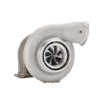
- Worn or damaged turbocharger — shaft play, chipped compressor/turbine, worn bearings → slower spool and low flow.
- Clogged intake filter or contaminated intercooler — airflow restriction or oil-soaked cores reduce charge flow.
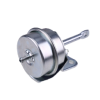
- Malfunctioning wastegate / actuator / boost control solenoid — stuck-open gate or weak actuator spring bleeds pressure.
- Diverter/recirculation valve failure (gasoline) — stuck-open membrane/piston vents boost back to intake.
- Sticking VGT vanes (diesel) — soot deposits keep geometry open → low boost at low–mid RPM.
- Exhaust restriction — collapsed DPF/cat or blocked exhaust limits turbine energy.
- Sensor / vacuum issues — faulty MAP/MAF, boost reference lines, check valves, vacuum pump output.
- ECU calibration / limp mode — conservative torque limiters after fault detection can cap boost.
| Cause | What to check | Quick test | Fix |
|---|---|---|---|
| Charge leak | Pipes, clamps, intercooler, DV/recirc ports | Smoke/pressure test to 0.5–1.0 bar; listen for hiss | Replace hoses/clamps/IC; reseal joints |
| Wastegate/actuator | Rod travel, actuator holds vacuum/pressure | Hand vacuum/pressure pump; observe movement | Adjust/replace actuator or solenoid |
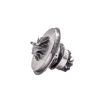
| VGT sticking (diesel) | Linkage free play, soot buildup | Basic setting test; commanded vs actual boost logs | Clean/repair VGT; replace CHRA if needed |
| Turbo wear | Shaft play, wheel damage, oil in housings | Endoscope/feel play; check noise/smoke | Rebuild or replace turbo |
| Restriction | Air filter, cats/DPF, intercooler core | ΔP/temperature before/after; visual check | Renew filter; service/replace cat/DPF/IC |
| Sensors/vacuum | MAP/MAF signals, hoses, one-way valves | OBD live data vs spec; smoke test vac lines | Repair wiring/hoses; replace faulty sensor |
Identifying Signs of Underboost
- Loss of power and poor acceleration, especially under load/higher gears.
- Unusual noises — hiss (leak), whistle/siren (wheel damage), flutter (DV issue).
- Higher fuel consumption and soot/smoke on diesels.
- Check Engine Light; frequent codes: P0299, P2263, P0234 history, MAP/MAF plausibility errors.
Addressing and Preventing Underboost
- Scan OBD: read/clear codes; log desired vs actual boost, N75/boost solenoid duty, MAP/MAF, wastegate/VGT position.
- Pressure/smoke test the charge system (0.5–1.0 bar) to find leaks at couplers, DV, intercooler, throttle body.
- Inspect control: verify wastegate rod travel (holds vacuum/pressure), VGT linkage free, solenoid clicking.
- Check filters & restrictions: air filter, intercooler fins/oil contamination, cat/DPF backpressure.
- Evaluate turbo condition: axial/radial play, wheel damage, oil traces; abnormal whine indicates wear.
- Sensors & vacuum: MAP/MAF values within spec; replace brittle vacuum lines and check one-way valves.
- Prevent: timely service, correct oil spec and cool-down, clamp retorque after service; keep logs after repairs.
Safety note: pressurizing the intake must be done with a regulated source; never exceed system limits.