




 Secure Shipping

 Worldwide express delivery
 Secure Payment
Turbocharger – What is It?

History
The first person to formulate and patent the principle of operation of a turbocharger was the Swiss engineer, Alfred Buchi. In 1905, he realized the idea of injecting additional air into the engine cylinders, using the energy of exhaust gases, which had long been of interest to automobile manufacturers. With the help of his invention, the engineer achieved an increase in engine power by 40%.
Turbo technology did not immediately reach the ordinary consumer. Its application in the course of development has passed the following stages: large transport (aircraft, ships) – trucks – racing cars – mass production cars. Passenger cars with a turbocharged engine became really popular and reliable in the 70s and 80s of the 20th century.
Work of turbo charger
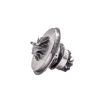
The turbocharger consists of two bodies (so-called snails), under which the impellers are hidden, united by a common shaft.
1. Turbo impeller: uncoils from the energy of the exhaust gases and drives the common shaft
2. Compressor impeller: starts rotating from the common shaft, captures the surrounding air and pumps it into the engine cylinders
Thus, a larger amount of air-fuel mixture enters the cylinders, which increases the power. It gives the most important advantage: you do not need to buy a car with a multi-litre engine for the sake of high power. Due to the injection of air into the engine, even small, turbocharged engines can achieve excellent performance.
Perspectives
Today, technical improvements and reliable materials allow you to control the boost force, extend the service life of the turbocharger and maintain it easily and efficiently. Against the background of increasingly strict requirements for the amount of exhaust emissions, the turbocharger is becoming an almost indispensable part of the vehicle’s equipment, as it makes driving more fuel-efficient and, consequently, more environmentally friendly.